Design that starts with how people actually work
Most B2B products do not fail because of missing features. They fail because users cannot find the features, do not trust the data they see, or give up halfway through a workflow that made sense to the team that built it. Our UI/UX design services close that gap by grounding every design decision in evidence about your users, then turning it into interfaces your engineers can build with confidence.
We work as a product design partner, not a mockup factory. That means asking why a screen exists before deciding what it looks like, and testing ideas with real users before they become expensive code.
What our product design services cover
Research is only useful if it changes what you build. We keep it focused: interviews with users and internal stakeholders, a review of your analytics and support tickets, and observation of how people complete key tasks today. From that we produce personas, jobs-to-be-done and user journey maps that highlight where people struggle and where the business loses value.
From wireframes to interactive prototypes
We start with low-fidelity wireframes so structure and flow can be debated cheaply. Once the flow is right, we move to high-fidelity screens and an interactive Figma prototype. Prototypes let you put a realistic experience in front of customers, sales teams and executives, and collect feedback weeks before development would otherwise reveal the same problems.
Design systems with tokens
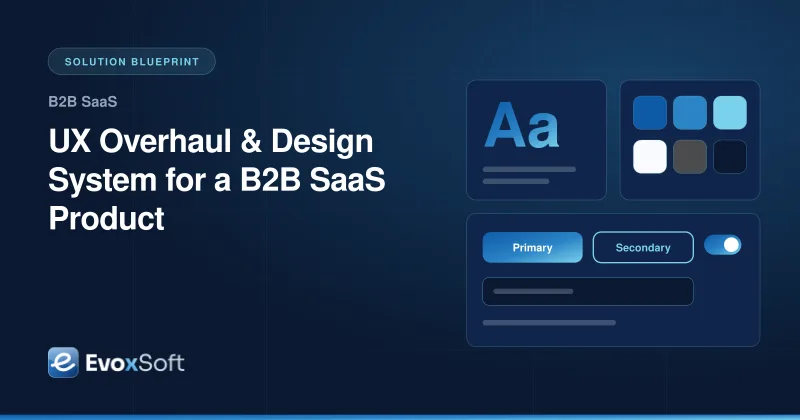
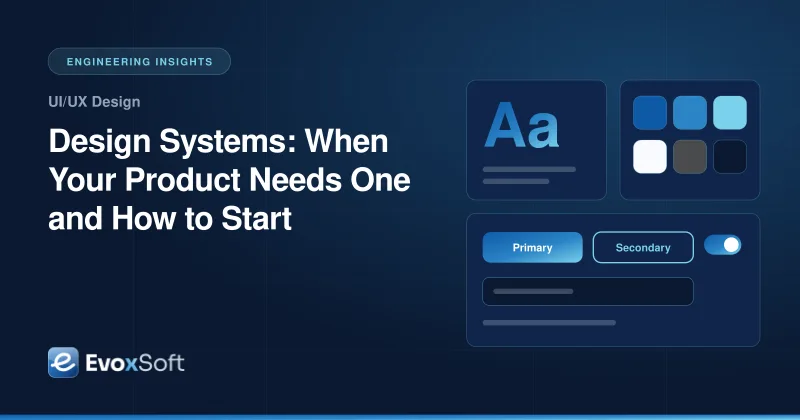
A design system is the difference between a product that stays consistent as it grows and one that drifts screen by screen. We build Figma component libraries backed by design tokens for color, typography, spacing, radius and motion. Tokens give designers and developers a single source of truth, make light and dark themes practical, and let you rebrand or add a white-label theme without redesigning every screen.
Usability testing
We test prototypes and live products with representative users, either in moderated sessions where we can ask follow-up questions or in unmoderated remote studies for broader coverage. Findings are grouped by severity and tied to specific screens, so your team knows exactly what to change and why.
Accessibility and UX audits
If you already have a product in the market, a UX audit is often the fastest way to find improvements. We combine a heuristic evaluation with a WCAG 2.2 AA accessibility review covering contrast, keyboard navigation, focus order, screen reader labels and form errors. The result is a prioritized backlog of fixes your team can start on immediately. Accessibility matters for B2B buyers too: many enterprise and public-sector procurement processes ask vendors about it.
Handoff that engineers appreciate
Design work loses value when it reaches developers as a stack of static screens. Our handoff includes annotated specs in Figma Dev Mode, every empty, loading and error state, responsive rules for each breakpoint, and design tokens your front-end can consume directly. Our designers stay available during the build and review staging environments to catch gaps before release.
When you need the build handled as well, our web and mobile app development team works from the same files, and complex platforms can move straight into custom software development without a translation step between design and engineering.
When to bring in a UX design agency
Teams usually call us at one of a few moments:
- Before building a new product, to validate the concept and core flows with users before committing engineering budget.
- When adoption or retention is lower than expected, and analytics show where users drop off but not why.
- Before a major redesign, to decide what should change and what users already rely on.
- When the interface has grown inconsistent, and every new feature takes longer to design and build than it should.
- When accessibility becomes a requirement, often driven by an enterprise customer or a procurement review.
If your need is a marketing site rather than a product interface, our website design service is a better fit, and the two teams share the same design system approach.
How we measure success
Before design starts, we agree on what success looks like for your product. That might be task completion in usability tests, time to complete a key workflow, activation of a specific feature, or fewer support tickets on a known pain point. We set up the measurement with you so the impact of design changes can be observed after launch, rather than assumed.
Start with a conversation
Tell us about your product, your users and what is not working today. We will suggest whether an audit, a focused redesign of key flows, or a full product design engagement makes the most sense. Contact our team to schedule a discovery call.